
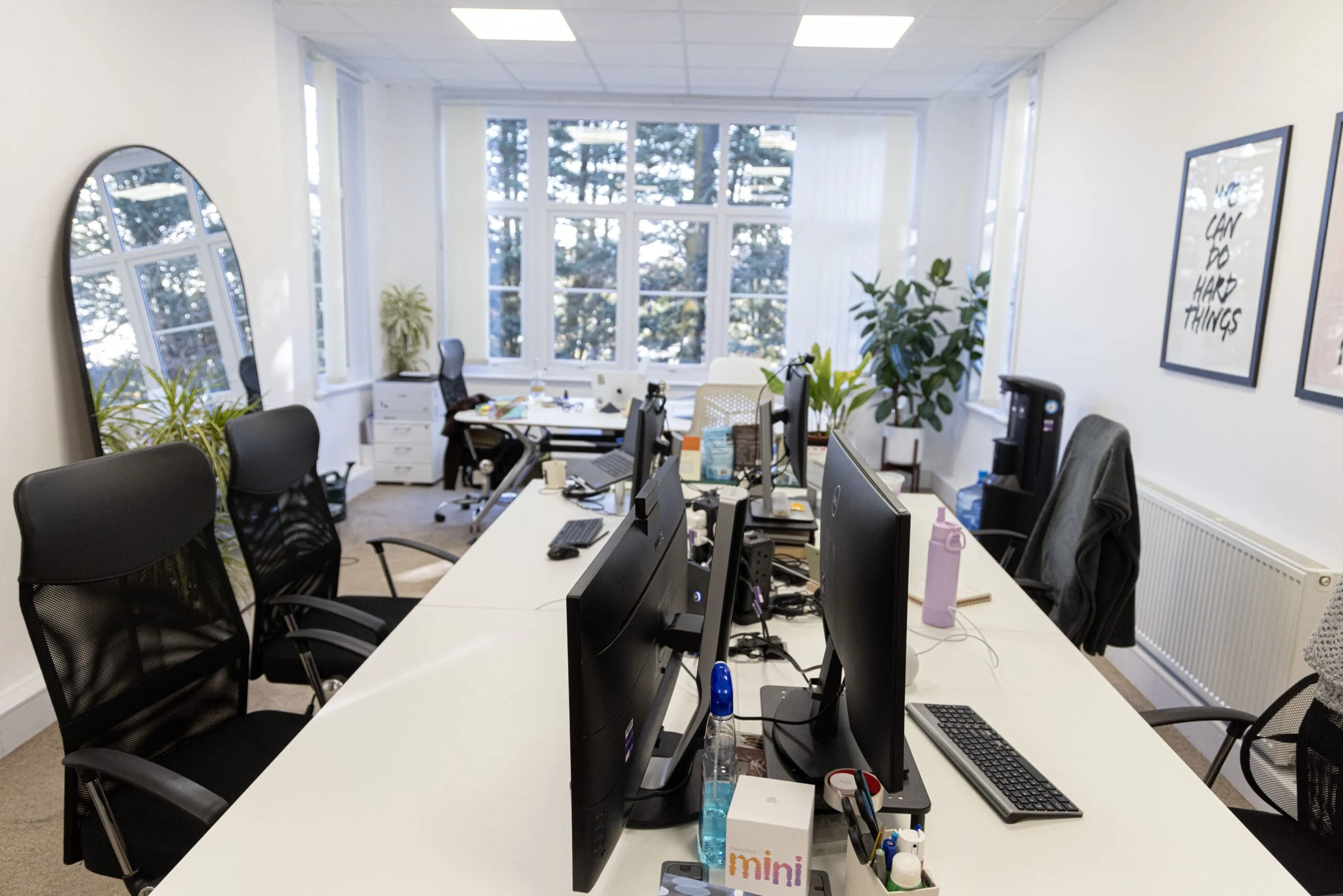
A serviced office is a furnished, ready-to-use private office inside a building that someone else runs. You pay one monthly fee that covers the room and the services around it, including reception, post handling, meeting rooms, kitchen and maintenance, and you rent on a short licence rather than a multi-year lease.
That is the definition. The rest of this guide shows what it means in practice, using one of our own rooms at Index House in Ascot as the example, and sets serviced offices against the alternatives so you can tell which one you actually need.
What is included in a serviced office?
A serviced office includes the furnished room itself plus the building’s shared services: a staffed reception, mail handling, meeting rooms, a kitchen, cleaning of common areas, building insurance and maintenance, and a connection to the internet. Most also include utilities and business rates within the fee, so the monthly figure is close to the whole cost.
Here is what the £795 a month 140 sq ft office at Index House comes with, as an example of a typical list.
- A private, lockable room with desks, chairs and storage already in place
- A reception team at the front door who greet your visitors and sign for deliveries
- Your post handled every working day
- Meeting rooms you can book for client meetings, interviews and team sessions
- A communal kitchen and breakout areas
- Secure on-site storage for documents, stock and equipment
- 24/7 building access
- Free on-site parking for you and your visitors
What is not included is your own kit. Bring laptops, screens if you want more than the standard set-up, and any specialist equipment. VAT is added to the fee.
Prices vary by room size and town. Our guide to serviced office costs in Berkshire sets out the full price list and compares it with Bracknell, Windsor and Camberley.
How a serviced office works day to day
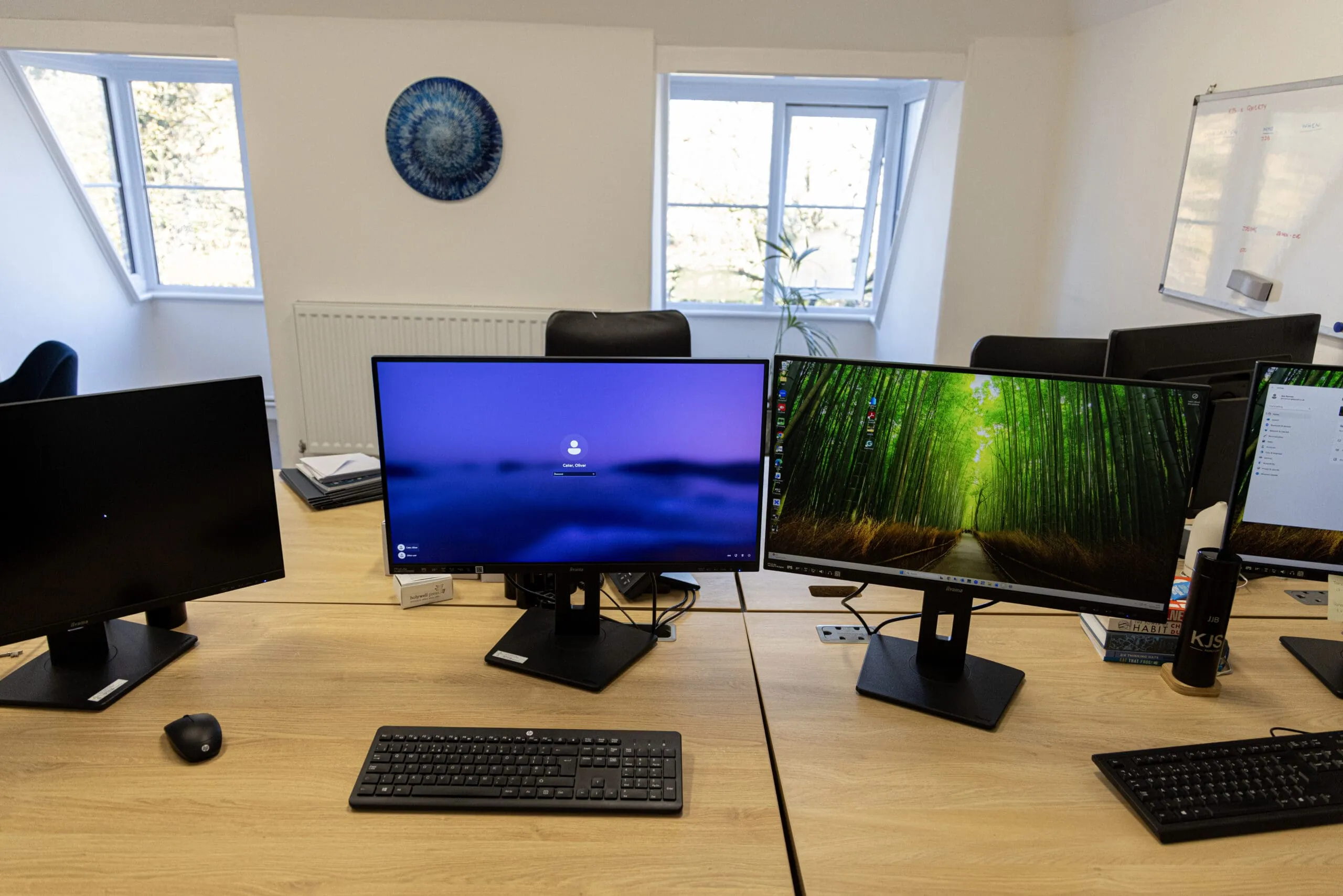
Day to day, a serviced office feels like having your own office with a building manager you never have to chase. You arrive, the door is open, the reception team has your post, and if the printer or the heating misbehaves you tell them rather than a landlord’s agent.
A few things from our own building that tend to surprise people on their first week.
The licence, not the lease. You sign a licence agreement that runs for months, not years. There is no solicitor, no schedule of condition and no repairing obligation.
Reception does the front of house. When a client arrives for a 10 o’clock, they are greeted by name and shown to the meeting room. Deliveries are signed for while you are out.
Meeting rooms are part of the deal. Office clients at Index House book the rooms as needed rather than paying by the hour, so a two-hour pitch does not cost extra.
The building is open when you need it. 24/7 access suits the accountants in January and the agencies with a Friday deadline.
You can grow without moving far. Several of our clients have moved from the 140 sq ft room to a larger one in the same building as they hired, keeping the address and the phone number.
Serviced office vs managed office vs lease
The three types of office differ by who manages the space and how long you commit. A serviced office is run by the operator on a short licence; a managed office is fitted out for you by an operator on a one to three year agreement; a leased office is an empty space you take on for three to ten years and run yourself.
| Serviced office | Managed office | Leased office | |
|---|---|---|---|
| Minimum term | One month upwards | Typically one to three years | Three to ten years |
| What you sign | Licence | Managed agreement | Lease |
| Fit-out and furniture | Already done | Done to your brief, at your cost over the term | Your cost, your contractor |
| Business rates and utilities | Bundled in the fee | Usually bundled | Billed to you directly |
| Branding the space | Limited | Full | Full |
| Move-in time | Days | Weeks to months | Months |
| Deposit | Usually one to two months | Three to six months (Hubble, 2026) | Often a rent deposit plus guarantor |
| Best for | One to twenty people who want simplicity | Twenty plus who want their own identity | Established firms with a facilities budget |
The gov.uk guide to renting business property sets out the responsibilities you take on with a lease, which is a useful reminder of what a serviced licence spares you.
Serviced office vs coworking
Coworking gives you a desk on a shared floor; a serviced office gives you a room. Coworking is cheaper per person and more sociable, and it suits freelancers and very early-stage teams. A serviced office suits anyone who takes calls all day, keeps client files or needs the team in one place behind a door.
Plenty of people use both. Our hot desks are private offices booked by the day, which is where several of our full-time office clients started.
Who uses serviced offices?
Small professional firms, mostly. At Index House the building is home to solicitors, financial advisers, an executive search firm, a creative production company, a conveyancing business and the UK sales team of a Scottish shortbread brand, in rooms from one person to eight.
The common thread is that none of them want to run a building. They want a credible address, a quiet room, someone on the door and the freedom to change their mind in a year.
Serviced offices also suit businesses arriving in an area. A company opening a Berkshire base can take a room in Ascot in a week, test the market and expand or leave without a lease hanging over the decision.
Are serviced offices worth it?
For a business of one to eight people, usually yes. The monthly fee is a little higher than bare rent, and in exchange you avoid fit-out costs, legal fees, business rates admin and a long commitment, while getting reception, post handling, meeting rooms and parking thrown in. Our oldest clients have been here for over 20 years, which is the honest test.
They are not worth it for everyone. A large team with its own IT and facilities staff will pay less per head on a managed office or lease. A one-person business that works from home and only needs an address should start with a virtual office at £39 a month and upgrade when the home office stops working.
How to rent a serviced office
Renting a serviced office takes four steps: view the room, complete identity checks, sign the licence and pay the deposit, then move in. At Index House that can all happen within a week when a room is free.
- View it. Walk the room, the meeting rooms, the kitchen and the car park. Ask what the fee includes and what notice applies.
- Identity checks. Address and workspace providers are regulated under the anti-money-laundering rules, so expect to show ID for the business and its directors.
- Sign and pay. A licence agreement and a deposit, typically one to two months’ fees. No solicitor needed.
- Move in. Collect your keys, plug in, tell Companies House and your bank the new address if you are using it as your registered office.
If you are at the viewing stage, the serviced offices page shows which rooms are available at Index House this month and what each one costs.